
What is AI market intelligence?
AI market intelligence uses automated data collection and analysis to help organisations understand competitor activity, product gaps, market signals and strategic opportunities. It supports faster decision-making by turning large amounts of external information into structured insights, comparisons and recommended actions.
Market information exists everywhere. Decision-ready intelligence does not.
Most leadership teams already have access to websites, reports, articles, social media, product pages and internal observations. The problem is that this information is scattered across sources, updated at different times, difficult to compare consistently, dependent on manual research and rarely connected to an execution plan.
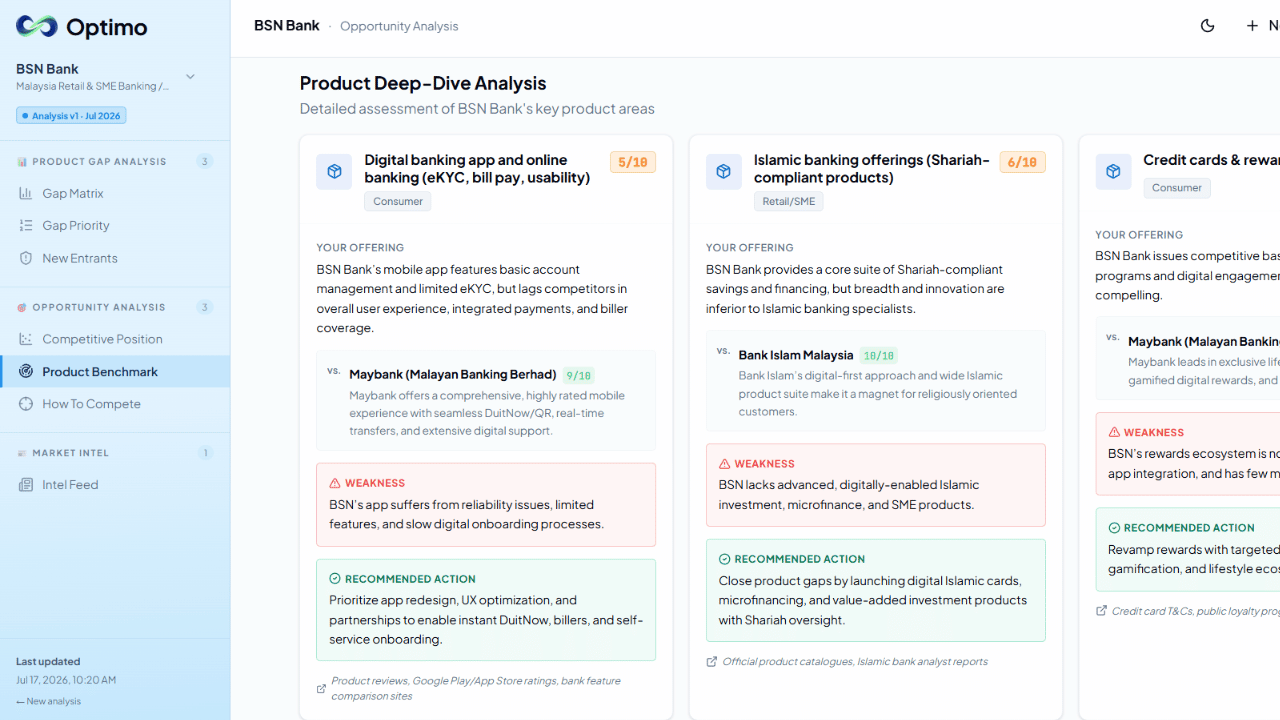
How SEE works
What the client receives
Output
Purpose
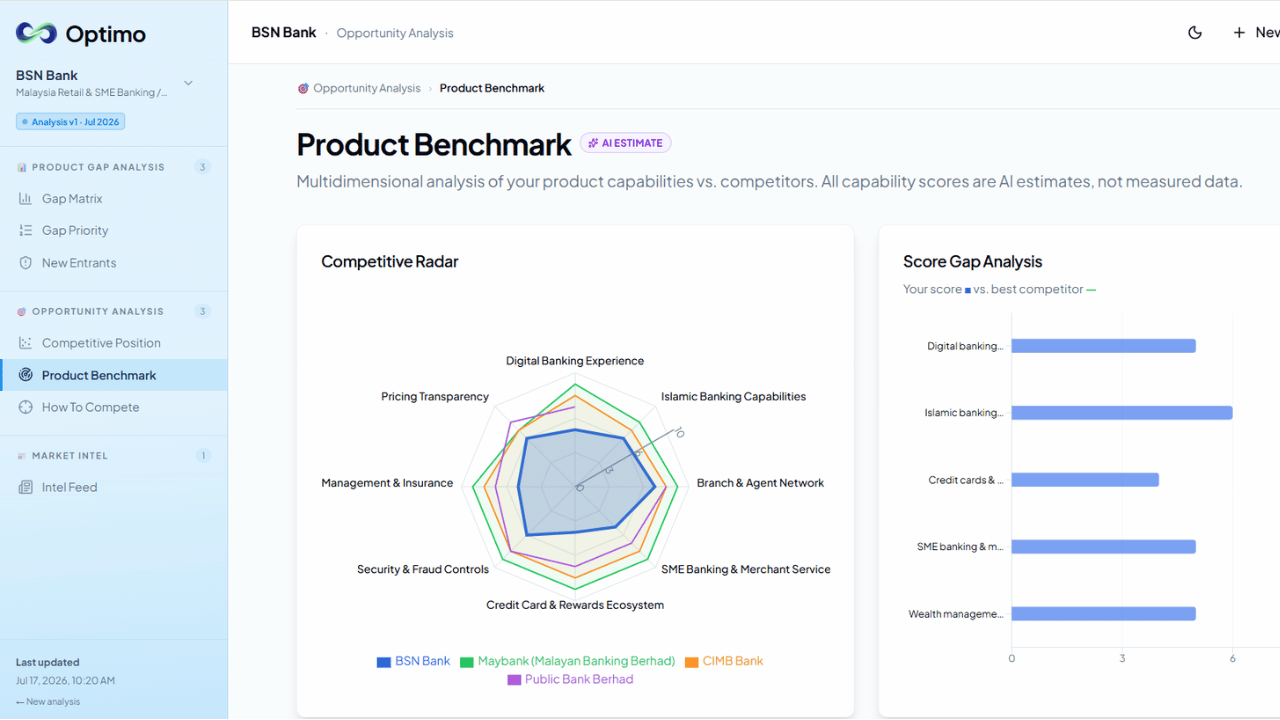
Competitive radar
Compare selected organisations across agreed factors
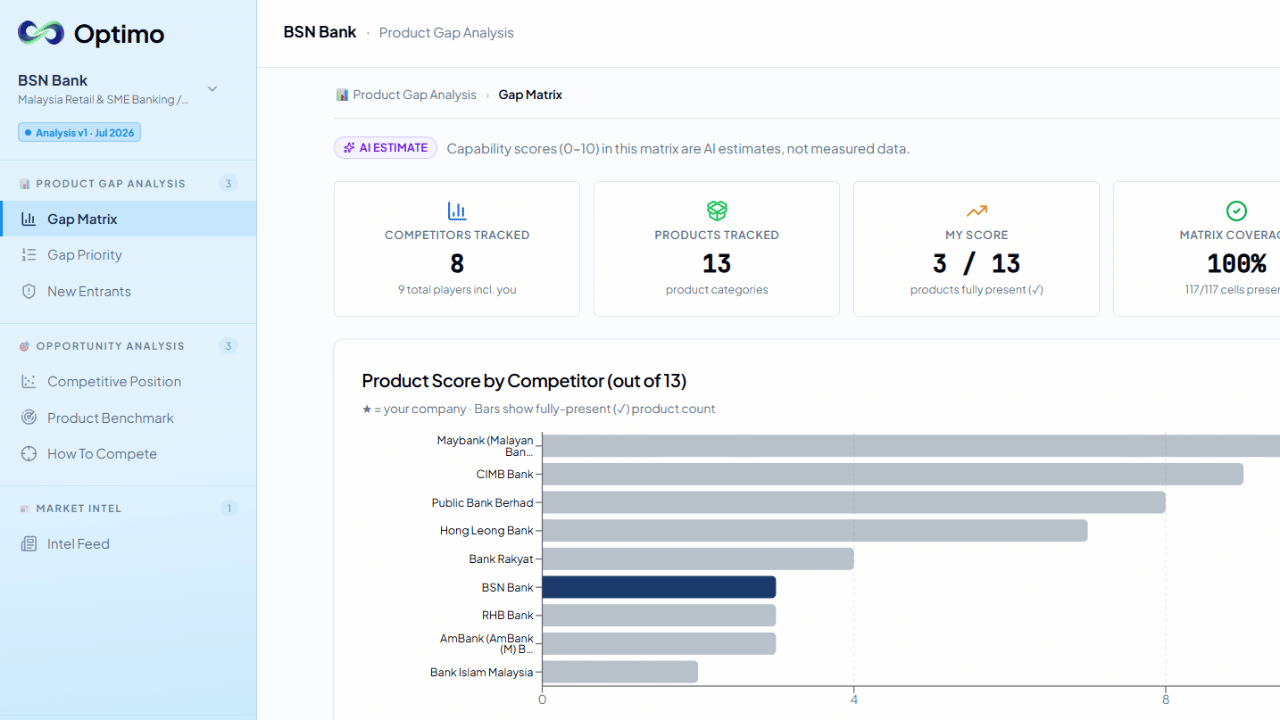
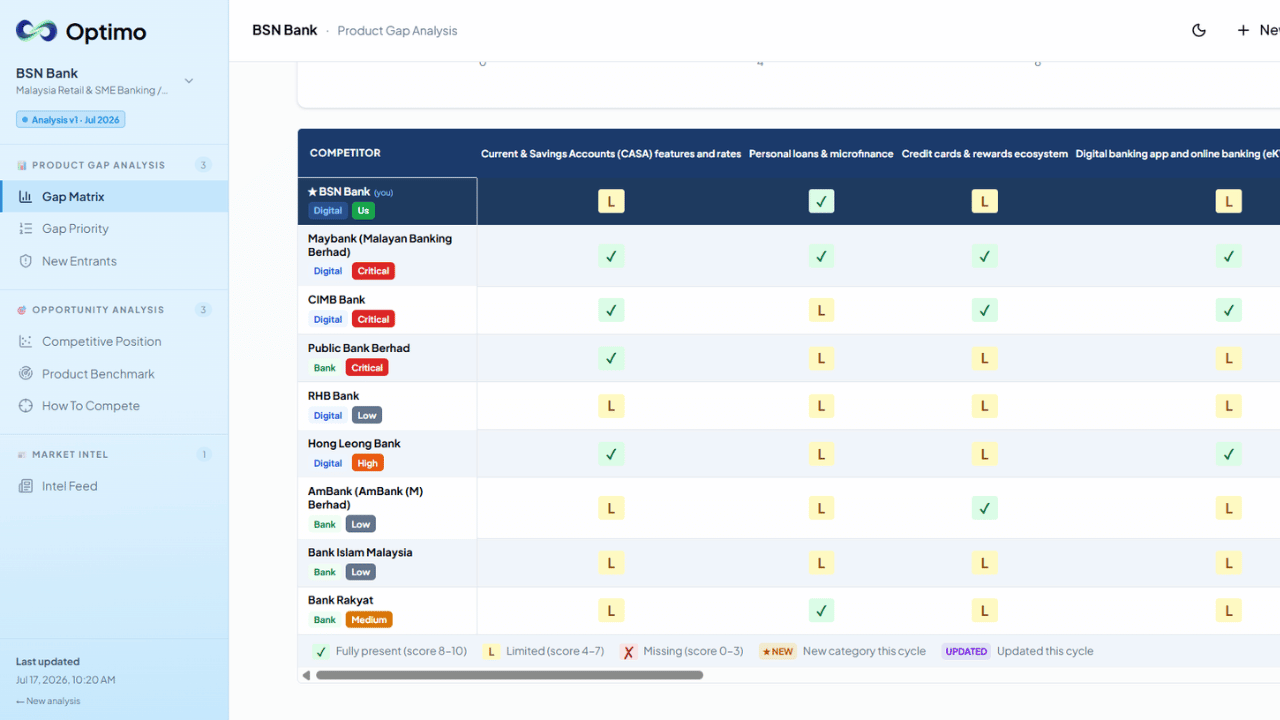
Product gap matrix
Identify missing, weak or differentiated capabilities
Competitor profiles
Summarise position, offering and observed movements
Market signal feed
Track relevant public developments
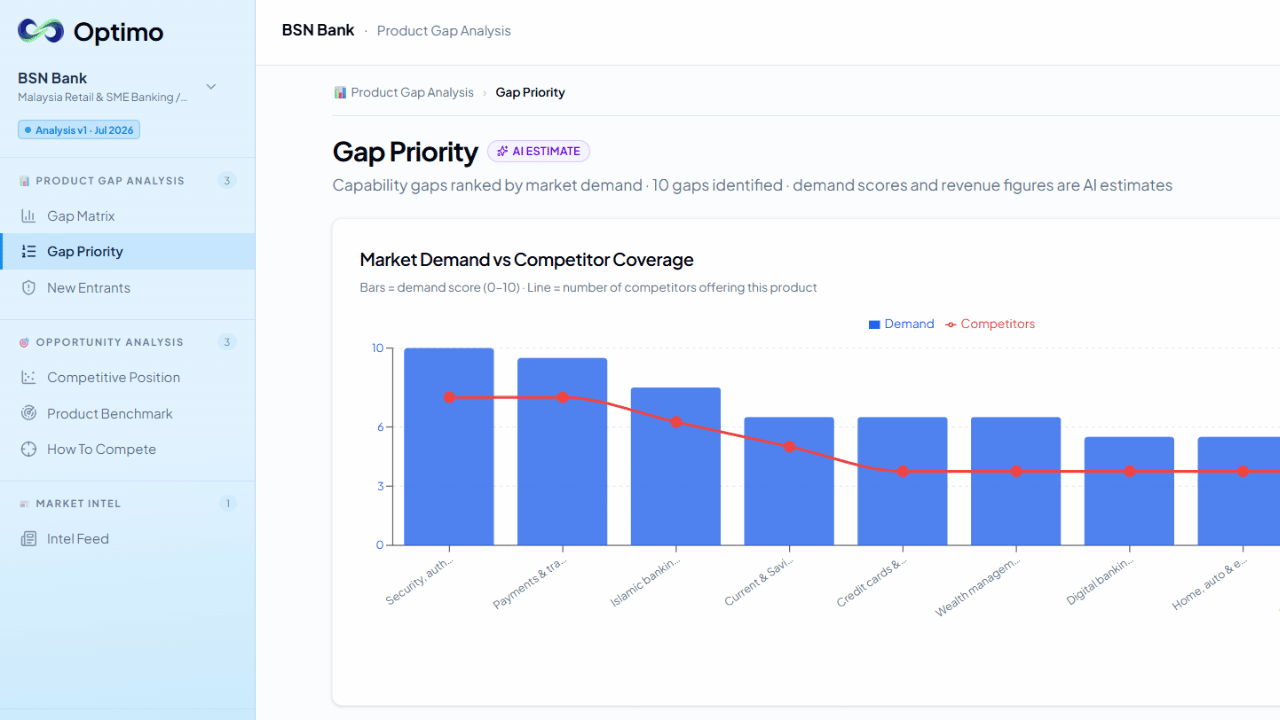
Opportunity map
Prioritise areas with potential strategic value
How-to-compete playbook
Convert findings into immediate, mid-term and longer-term actions
Leadership dashboard
Provide a shared view for decision-making