See what has been built, how it works and what OPTIMO can help you prove next.

AI claims are easy to make. The questions that matter: What has been built? What does the architecture look like? Where does AI sit? How is work governed? What remains under human control? What can be measured?

Not all proof is the same.

To avoid overstating what exists, every item on this website carries a visible status label.

Built platform Live deployment Proof of concept Demo environment Illustrative use case Client-approved case study Research benchmark

What proof does Optimo provide?

Optimo demonstrates its delivery capability through platforms built on Optimo Core, working dashboards, technical architecture diagrams, solution demonstrations and clearly labelled illustrative use cases. Every proof item states whether it is a live product, proof of concept, demo environment, illustrative scenario or client-approved deployment.

Platforms built on Optimo Core

Different industries. One reusable execution foundation.
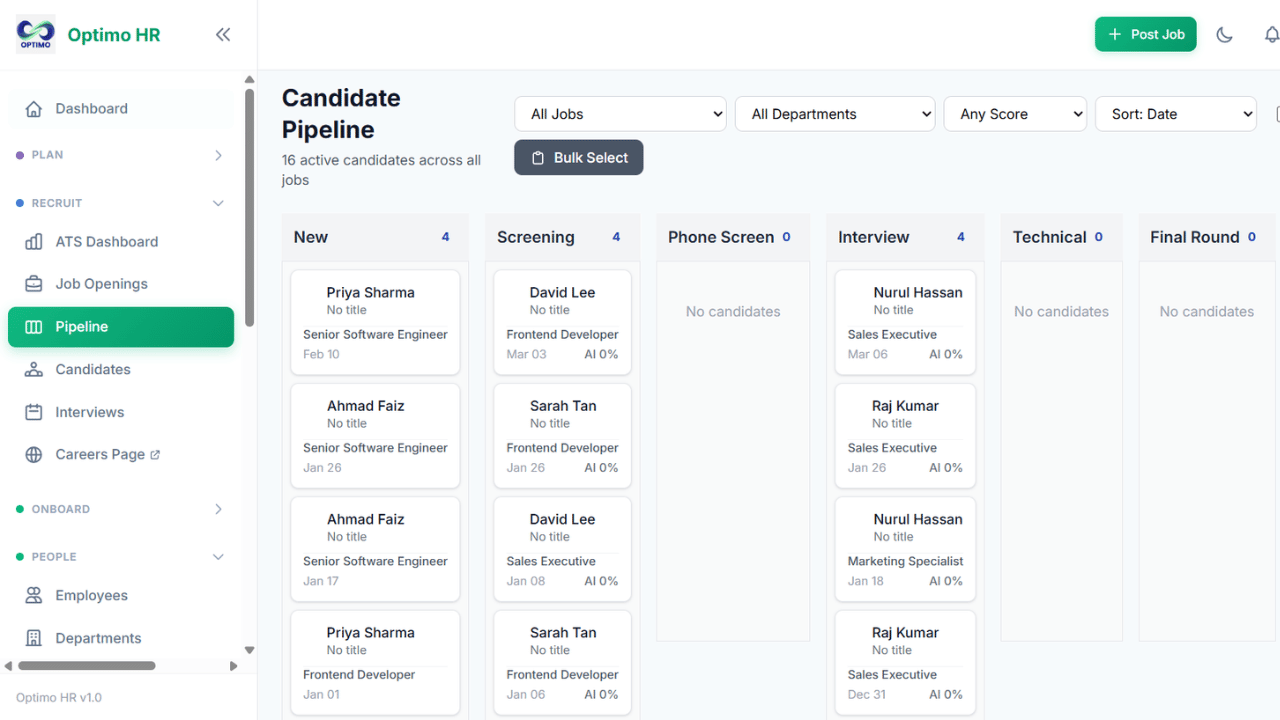
Optimo HR

A hire-to-retire employee lifecycle platform designed to structure HR work across recruitment, onboarding, employee administration, performance and exit. Employee and manager portals, candidate pipeline, leave and requests, approvals, dashboards and audit history.

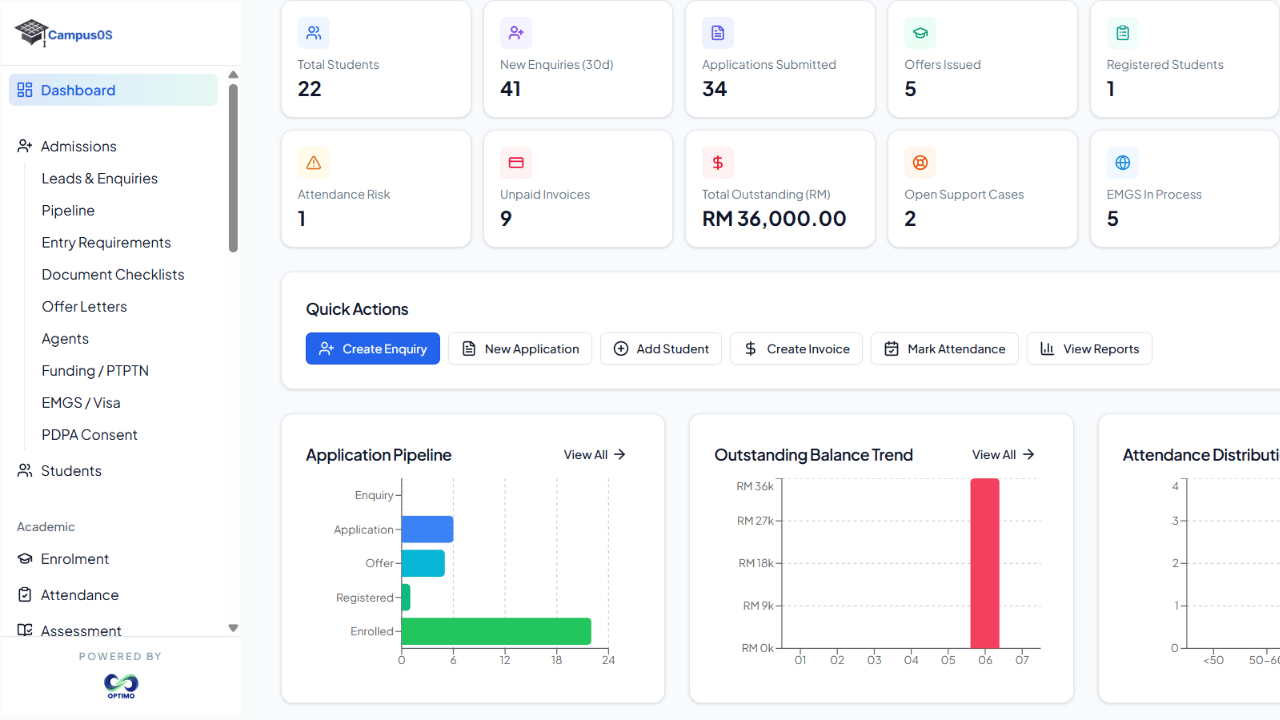
Campus OS

A student lifecycle platform managing the journey from enquiry and admission through attendance, academic administration, student services and exit. Not positioned only as an LMS — it is the operating platform around the student lifecycle.

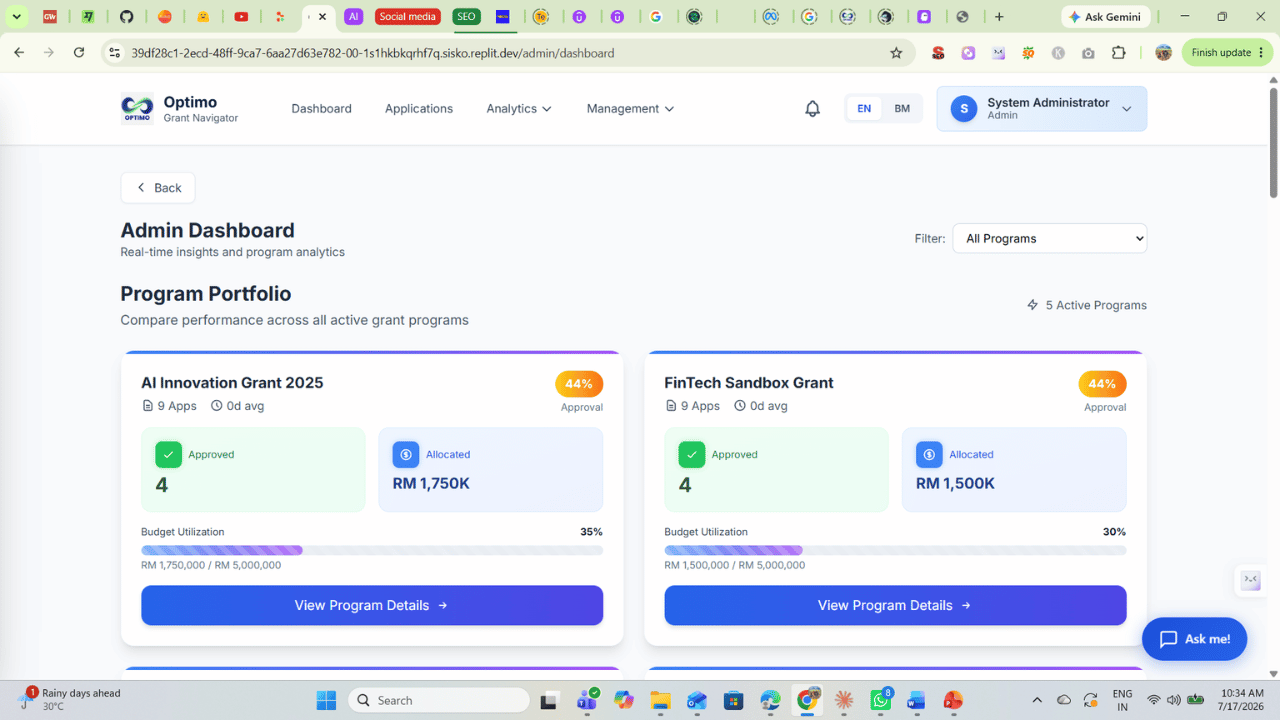
Grant Navigator

A grant application and approval platform covering intake, eligibility, assessment, scoring, decisions, milestones, funding and closeout — one structured, auditable process instead of email submissions and spreadsheets.

How a legacy lending process could be modernised progressively

A bank depends on a 20-year-old loan-origination system. Changes take months, knowledge is concentrated in a few engineers, audit preparation is manual, and public AI tools are unacceptable for sensitive code and customer information.

Weeks 1–4

Capture

AI reads the legacy code and documents. A living knowledge base replaces tribal memory.

Weeks 5–10

Build

AI SDLC generates new services and UI on Optimo Core inside the bank's own environment.

Weeks 8–14

Test

AI STLC runs continuous regression and compliance packs. Every run logged as audit evidence.

Weeks 15–16

Go live

Progressive cutover, no big bang. The old system retires step by step.

Proof must be connected to an outcome.

Area Example measures
Market intelligence Time to identify a market movement, opportunity count, leadership usage
Workflow automation Cycle time, manual touches, SLA compliance, exception rate
AI agent performance Completion rate, escalation rate, approval rate, response quality
Software delivery Lead time, test coverage, defect rate, release frequency
Knowledge capture Documentation coverage, onboarding time, retrieval accuracy
Business value Cost avoided, capacity released, revenue opportunity supported

Your organisation should be the next proof point.

Bring one market decision, one workflow or one technology bottleneck. Optimo will help define what should be demonstrated, which architecture is required, what can be measured, what can be delivered first and what must remain under human control.